Make G yours.
Listen, find the notes, then play them back. Your keyboard is the instrument.
⌨ Lower octave: A W S E D F T G Y H U J · Upper: K O L P ; ' ] Z X C V B N. Click inside this studio before using computer keys. On phones, slide the keyboard to reach higher notes. Black keys show both common note names.
Download your current note pattern and tempo, or print a practice sheet.
Practice G dominant ninth in a new way
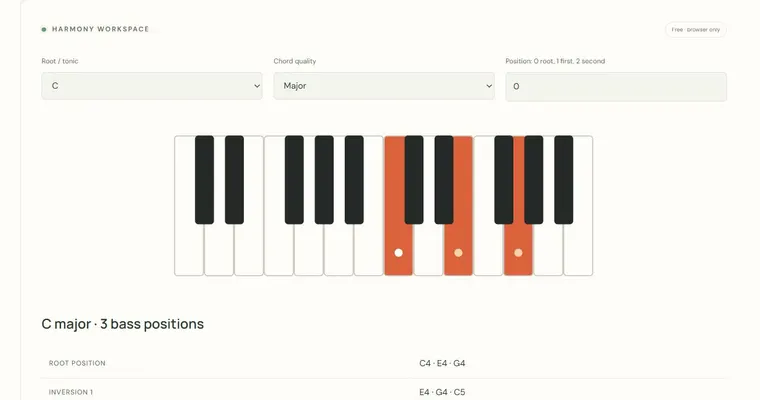
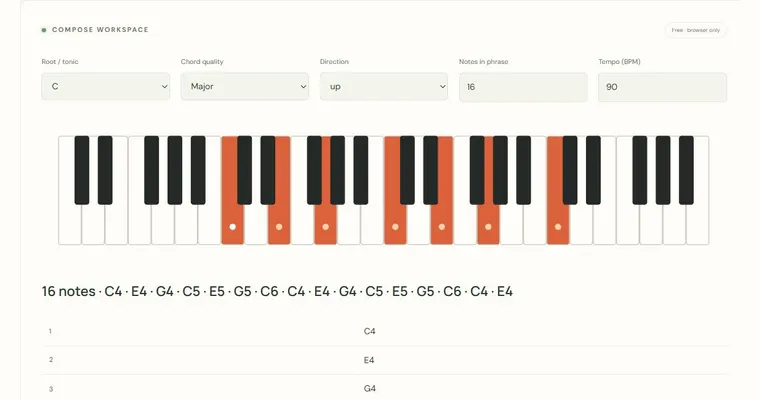
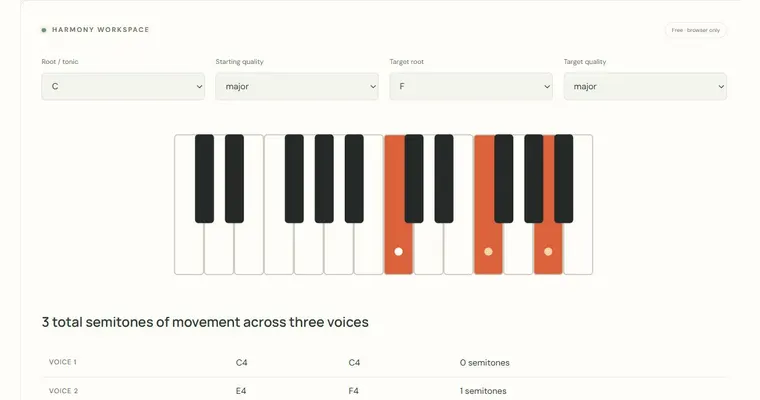
What notes make up G dominant ninth?
G dominant ninth contains G, B, D, F, A. Its interval formula is 1 3 5 b7 9. The numbers describe degrees relative to G; a flat lowers a degree by one semitone and a sharp raises it by one semitone.
| Degree | Note | Semitones from root |
|---|---|---|
| 1 | G | 0 |
| 3 | B | 4 |
| 5 | D | 7 |
| ♭7 | F | 10 |
| 9 | A | 14 |
Spelling follows the interval formula. Double accidentals can be correct; a different-looking key name may sound at the same pitch.
A useful way to practice it
Begin with the full reference shape; in accompaniment, explore omitting the fifth.
- Find G first. Say the remaining notes aloud: B, D, F, A.
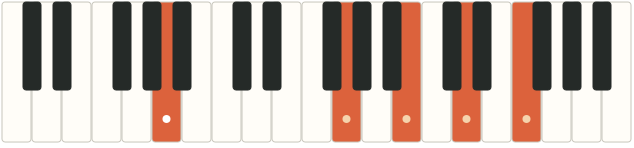
- Play each note separately, then sound the full chord. Check the 5 highlighted keys against the diagram.
- Compare the voicings below. Listen for the bass changing while the pitch classes remain the same.
- Download the MIDI to loop the example, or print the PDF and mark your own comfortable fingering.
Extended chords can span a wide range. Share the notes between both hands, roll the chord, or study one voice at a time; the diagrams do not prescribe a hand stretch.
Positions & voicings
Each diagram keeps the same chord tones while changing which note is lowest or moving the shape into another register. For extended chords, these are complete reference voicings rather than a compact accompaniment prescription.
Root position · middle register
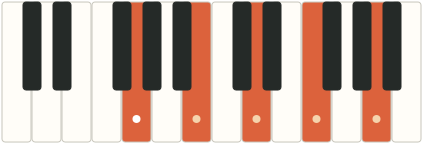
Root position · upper register
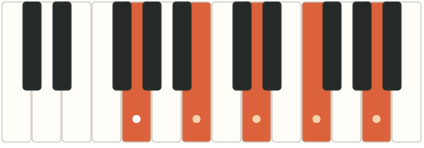
Inversion 1 · middle register
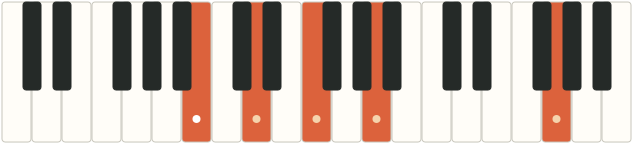
Inversion 1 · upper register
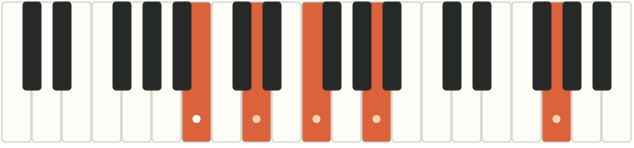
Inversion 2 · middle register
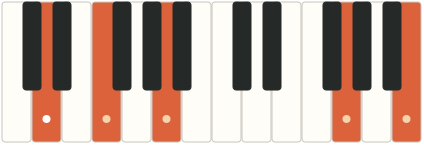
Inversion 2 · upper register
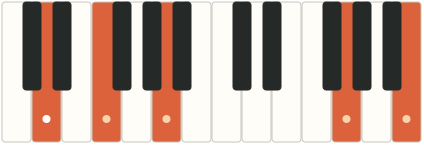
Inversion 3 · middle register
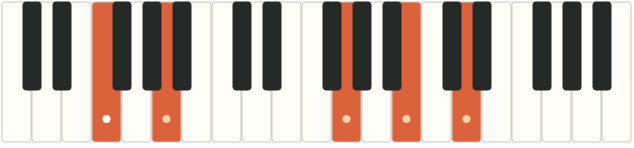
Inversion 3 · upper register
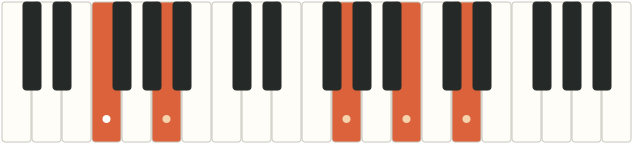
Inversion 4 · middle register
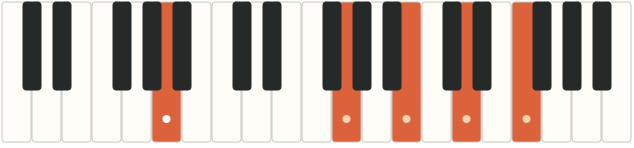
Inversion 4 · upper register
Using the files
The PDF includes every displayed position. SVG diagrams stay sharp when resized, and MIDI files contain the reference notes rather than a recording. Playback uses a simple synthesized tone; your MIDI app can use a different piano sound.
These diagrams are generated from the interval formula shown above. Read how our references are made →
Published · Original Artistry Piano reference · Report a correction