Make daily listening challenge part of your practice
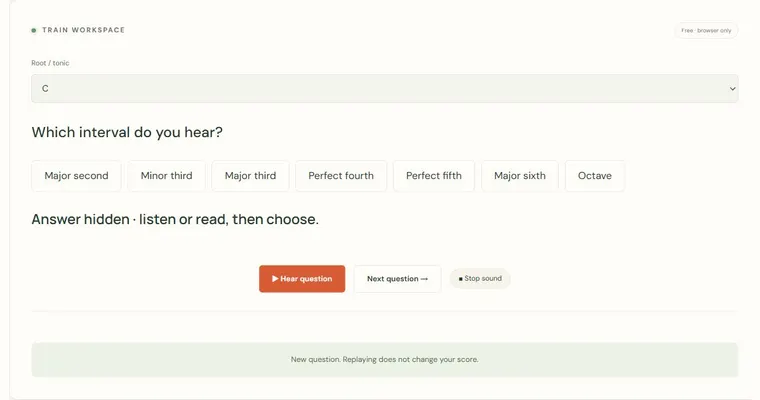
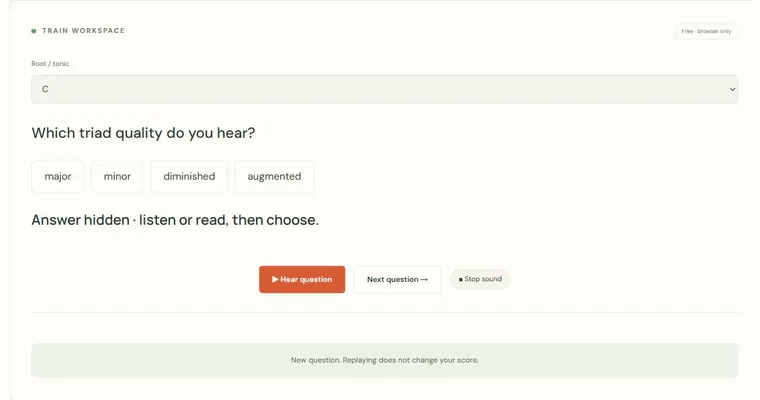
The Daily listening challenge gives you one date-based musical question each day. Hear it once, choose an answer, then read the explanation. The point is a small, repeatable listening habit rather than a score. The question rotates between intervals, chord qualities and scale degrees, and it is the same for everyone using the same local calendar date.
What the result means
A result tells you whether your choice matched the answer for today's question. A wrong answer is still useful, because the explanation shows what the correct sound is called and how it relates to the tonic. Your result describes this single attempt only. It does not certify a level of musical ability, and it cannot measure your hearing.
Why the explanation matters
Interval and chord names become memorable when you connect them to a sound. For example, a perfect fifth above C is G, which is seven semitones higher. A major third above C is E, four semitones higher. Reading the explanation after each attempt links the name, the note spelling and the sound together, which is the core skill the trainers build.
Why repetition helps
A date-based question offers a small repeatable starting point, with a different deterministic selection on the next local date. Saving completion records participation, including reviewing a mistake; it is not evidence of a measured skill level. Local calendar settings determine the question and can change its date. You can replay before answering, but the page records only one button answer until reloaded.
Try it step by step
- Open today's question and listen to the example once before choosing.
- Select an answer, then read the explanation even if you were right, noting the tonic and semitone count.
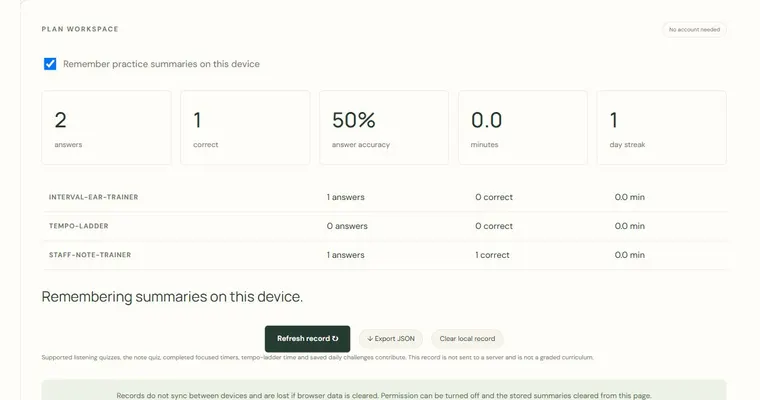
- Choose Save today's result only if you want an optional record stored in this browser.
- If you missed the question, open the matching trainer from the connected tools and compare the visible notes.
A concrete example
For a hypothetical interval question, C4 followed by G4 is a perfect fifth. Count seven semitone moves from C to reach G, without counting the starting key as the first move. Today’s actual question may use another root, chord quality or scale-degree task; read its revealed explanation rather than expecting this example every day.
A common wrong turn
Choosing an answer from memory of a melody, or counting from the wrong note, so the interval is misidentified.
Try this instead: Name the lower note first, count semitones upward to the higher note, and confirm the tonic before selecting an answer. A rest between notes does not change the interval.
Where to go next — and why
This guide was drafted with Claude Haiku and edited against this tool’s implemented controls. Report a confusing instruction or incorrect example.