Ear training exercises
Connect intervals, chord qualities and scale degrees with the sounds you recognize.
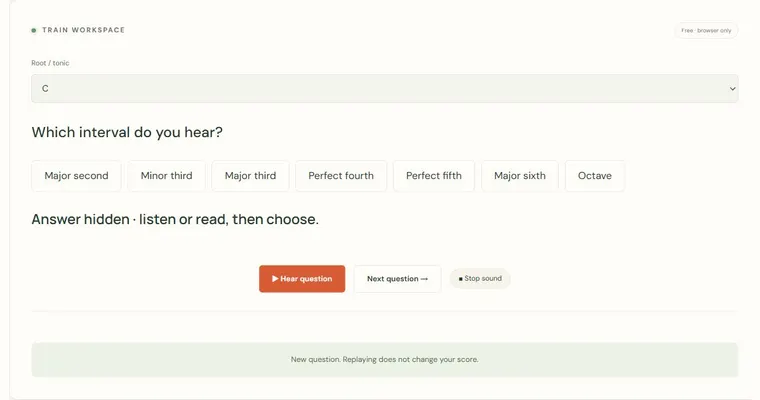
Interval ear trainer
Hear two notes, identify their interval and reveal the explanation.
Open tool & guide →Train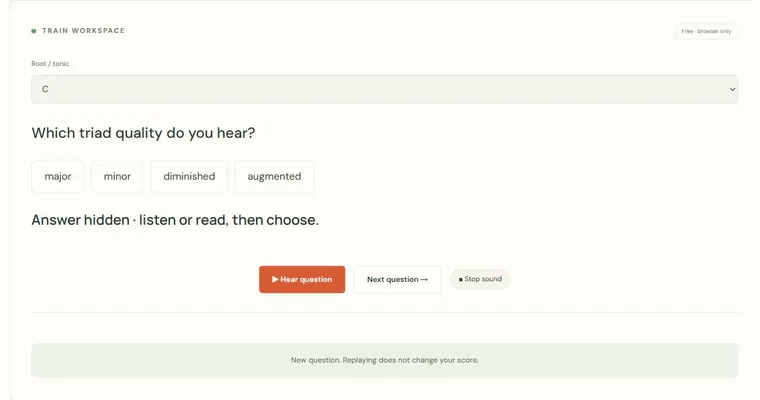
Chord quality ear trainer
Identify major, minor, diminished and augmented triads by listening.
Open tool & guide →Train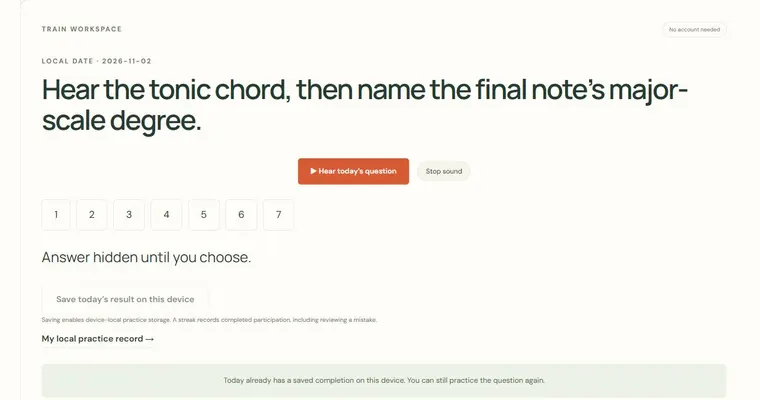
Daily listening challenge
Try one date-based musical question and optionally save a local streak.
Open tool & guide →Train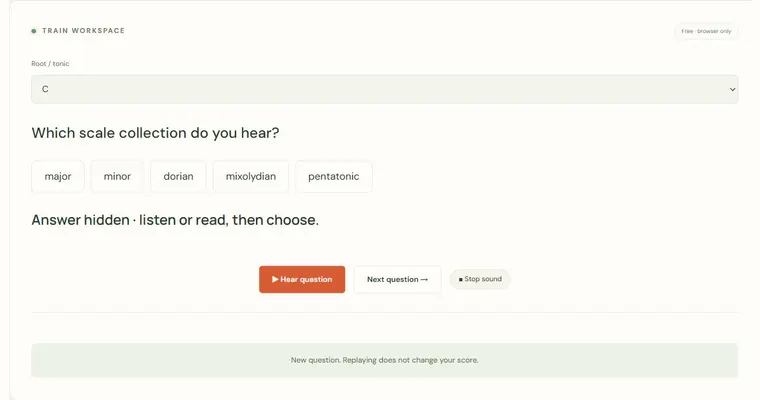
Scale identification trainer
Distinguish five ascending scale collections on the same tonic.
Open tool & guide →Train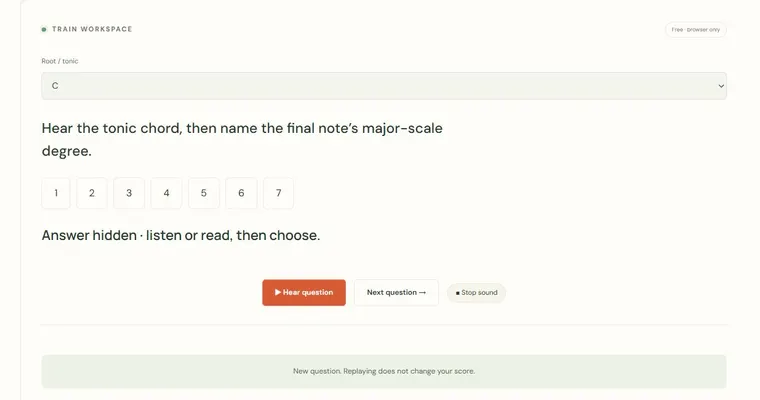
Functional scale-degree trainer
Hear a tonic chord, then identify a note within its major scale.
Open tool & guide →Choose the next useful question.
Choose one listening relationship before mixing many answer types. An interval trainer compares two notes, a chord trainer tests simultaneous pitch relationships, and a scale-degree question places a note against a tonic. Replay a question deliberately, make a first choice, then read its explanation. A correct button answer is a useful observation rather than proof of fluent performance. Optional progress saving keeps supported summaries on this device; achievements turn those saved activities into participation milestones. There is no microphone scoring in these listening drills.
Each linked workspace has its own example, controls and limitations. Keep the first set short enough to inspect every answer. When a result is surprising, connect it to a reference diagram or write the same pattern yourself before increasing difficulty. The aim is a repeatable observation you can take to an instrument, not a larger score without understanding.
Explore a related area
Theory reference room · Printable piano books · Resources for teachers
Latest posts
- Five Interesting Piano Facts That Define the Instrument
- Best Websites for Ear Training and How to Choose Them
- Good Questions for a Music Survey to Get Reliable Data
- How to Compose Piano Accompaniment for Any Melody
- How to Practice Piano Chord Inversions for Better Fluency
- Melodic Minor Scales for Piano Technical Basics
- What Is Piano Voice Leading and Why It Matters for Clarity
- Piano Performance Preparation and Practical Practice Methods
- Evaluating Piano Triad Information for Accuracy and Clarity
- Easy Piano Chord Progressions for Beginners to Learn