Staff notation exercises & diagrams
Read, build and illustrate notes, intervals, chords, scales and key signatures.
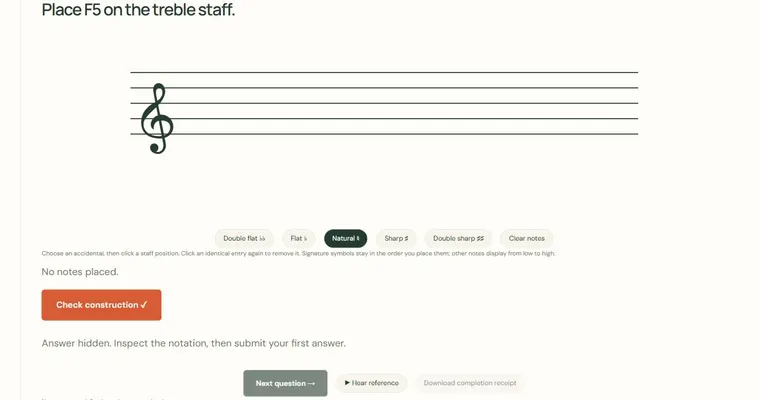
Note construction on the staff
Place a requested written pitch on a treble or bass staff, including accidentals.
Open tool & guide →Train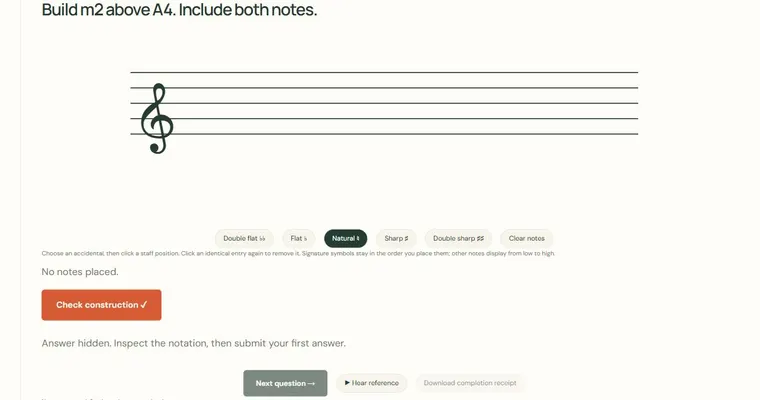
Interval construction on the staff
Build written intervals with the correct letter distance and semitone quality.
Open tool & guide →Plan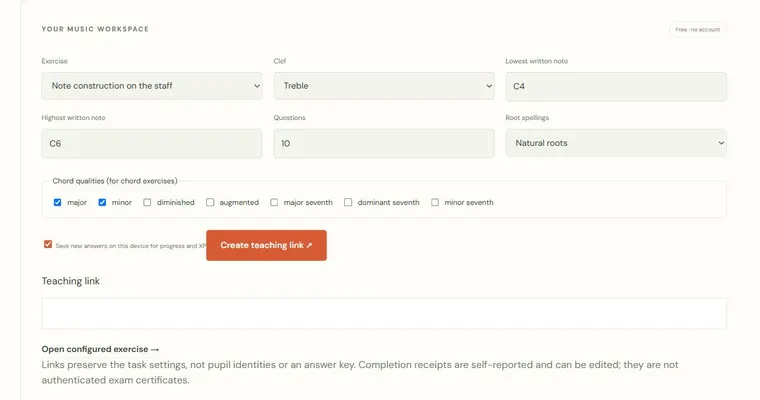
Teacher exercise customizer
Create a lasting link with clef, range, chord types and a fixed question count.
Open tool & guide →Train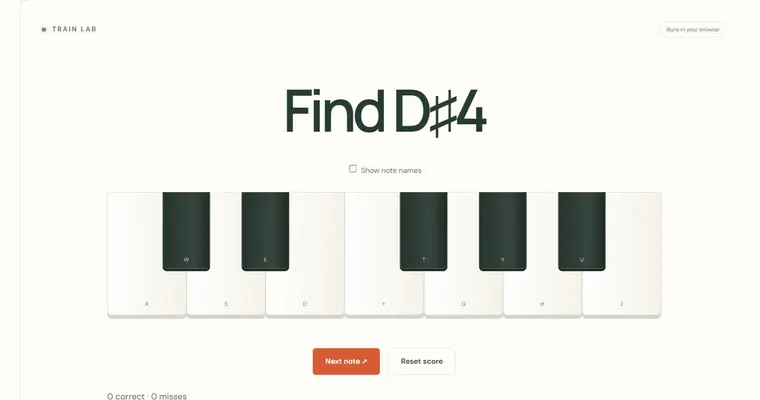
Find the note
Find a named note on an unlabeled one-octave keyboard.
Open tool & guide →Train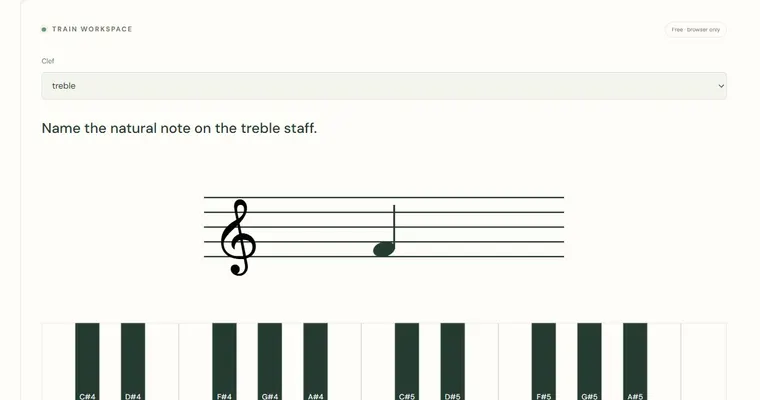
Treble & bass staff trainer
Name natural notes shown on a conventional five-line staff.
Open tool & guide →Plan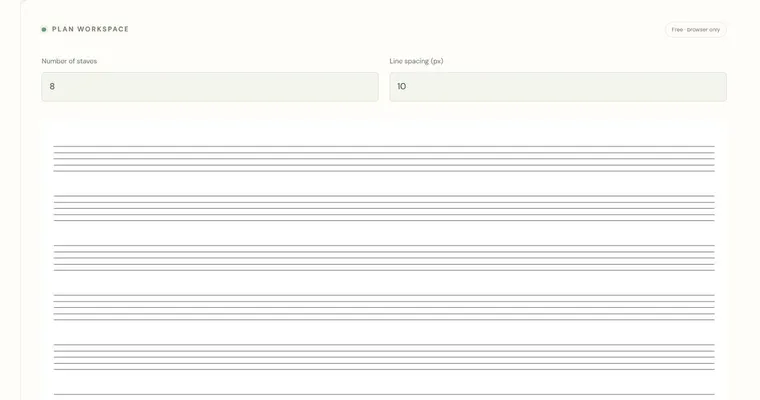
Printable staff paper generator
Create blank five-line staves and print or save them as PDF.
Open tool & guide →Train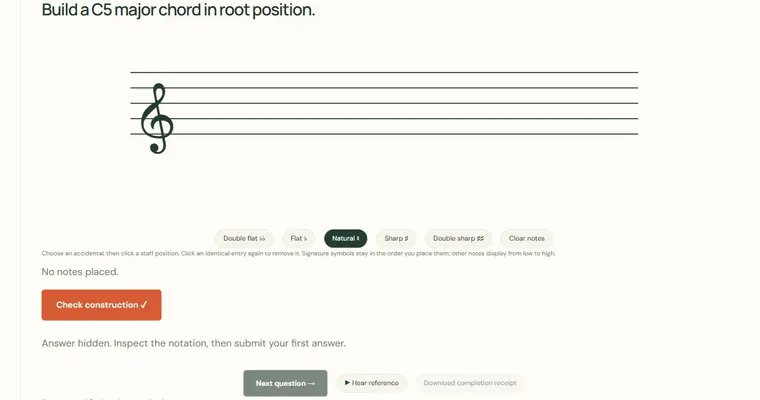
Chord construction on the staff
Construct triads and seventh chords as correctly spelled root-position stacks.
Open tool & guide →Train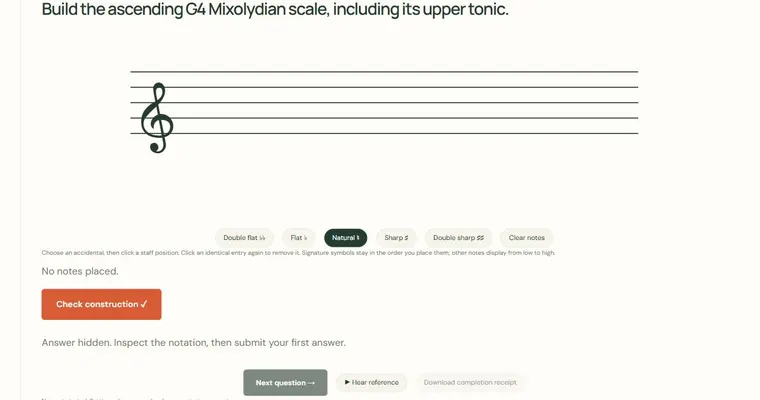
Scale construction on the staff
Write major, natural minor and selected modal scales with their correct spellings.
Open tool & guide →Train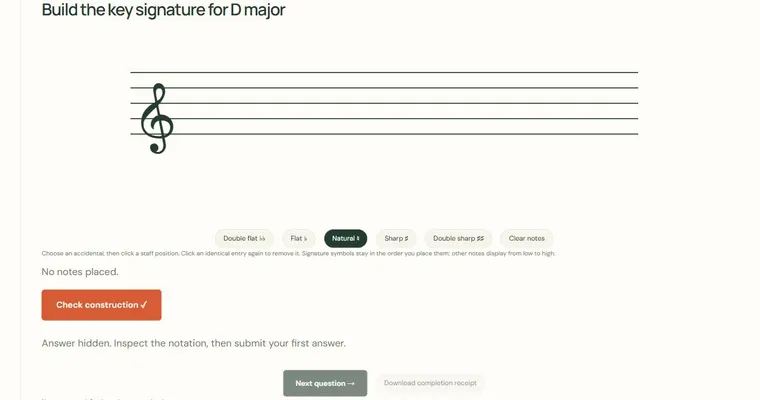
Key signature construction
Place sharp or flat symbols in conventional key-signature order and staff positions.
Open tool & guide →Train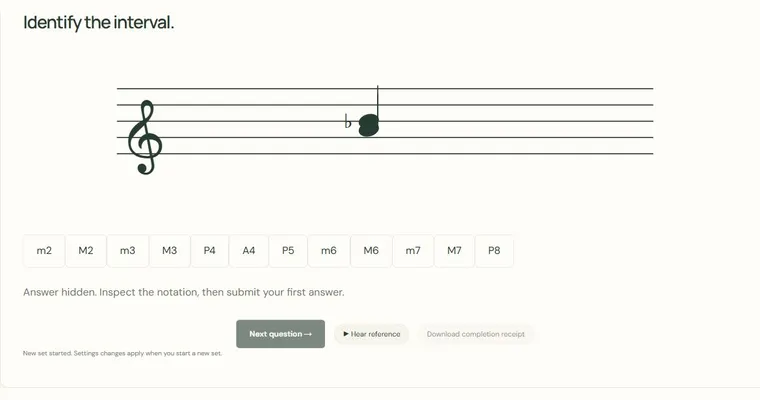
Interval identification on the staff
Read two written notes and identify their ascending interval quality.
Open tool & guide →Train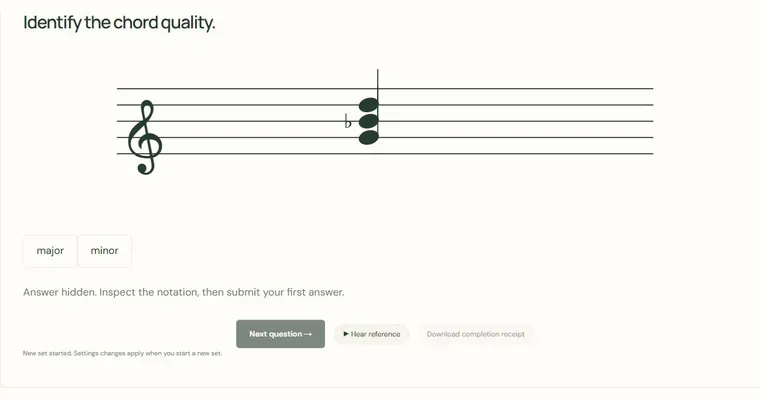
Chord identification on the staff
Recognize root-position triads and seventh chords from written notation.
Open tool & guide →Train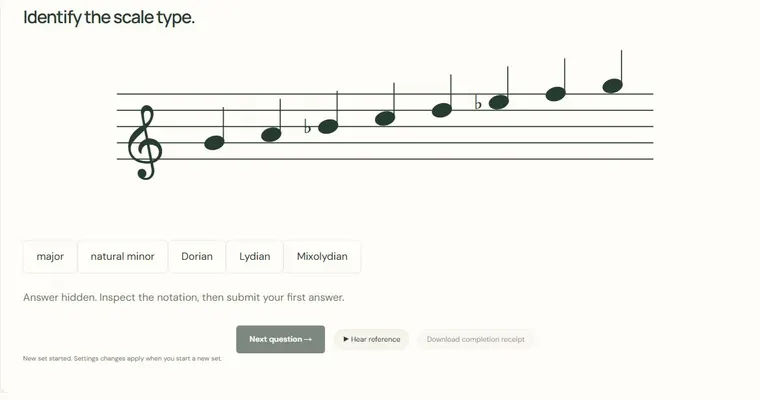
Scale identification on the staff
Identify major, natural minor, Dorian, Lydian and Mixolydian from written notes.
Open tool & guide →Train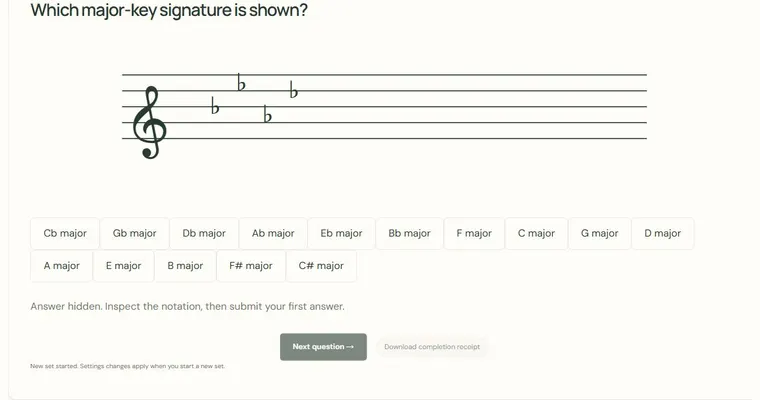
Key signature identification
Read conventional sharp and flat signatures in treble or bass clef.
Open tool & guide →Train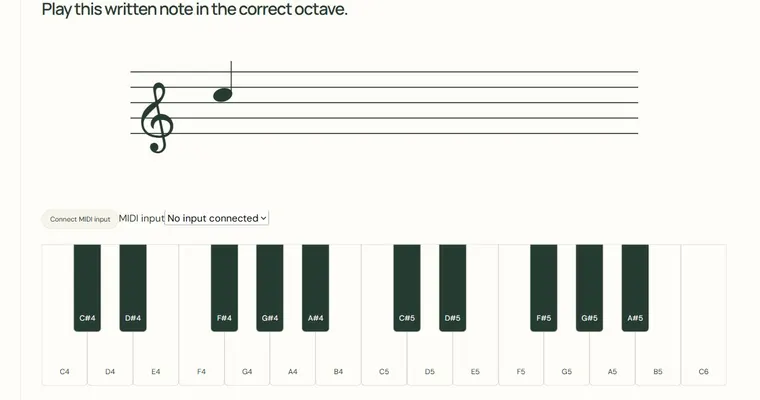
MIDI sight-reading trainer
Read chromatic staff notes and answer on a connected MIDI keyboard or screen piano.
Open tool & guide →Compose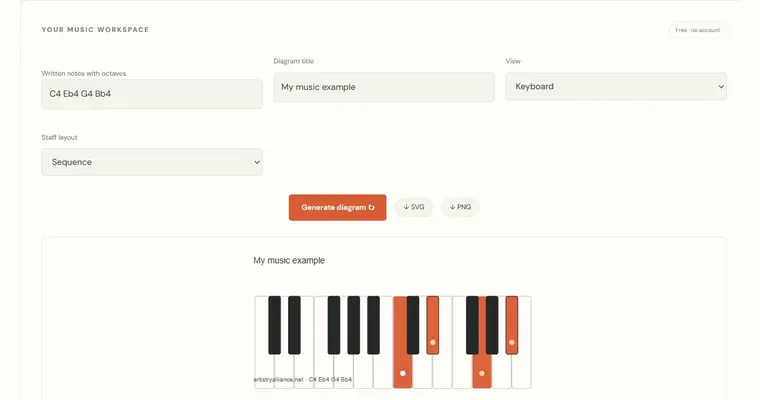
Custom keyboard & staff diagram generator
Turn any written-note collection into downloadable SVG or PNG teaching diagrams.
Open tool & guide →Choose the next useful question.
Identification asks what a displayed object is. Construction asks you to create it, exposing whether you understand the letter positions and accidentals behind the sound. Work in one clef and a comfortable range, then add chromatic roots or more chord qualities. Every construction check uses written spellings and octaves. A teacher can create a permanent configuration link for a short session; each learner receives a fresh random question set within those constraints. Completion receipts are editable browser summaries, so use them as practice reports rather than authenticated examinations.
Each linked workspace has its own example, controls and limitations. Keep the first set short enough to inspect every answer. When a result is surprising, connect it to a reference diagram or write the same pattern yourself before increasing difficulty. The aim is a repeatable observation you can take to an instrument, not a larger score without understanding.
Explore a related area
Theory reference room · Printable piano books · Resources for teachers