How to use scale construction on the staff
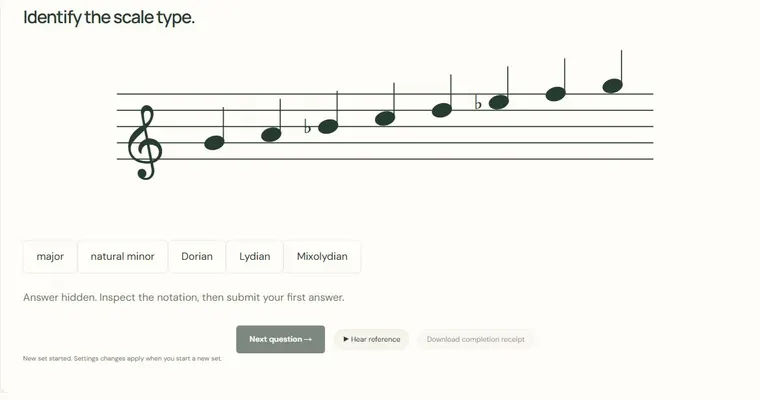
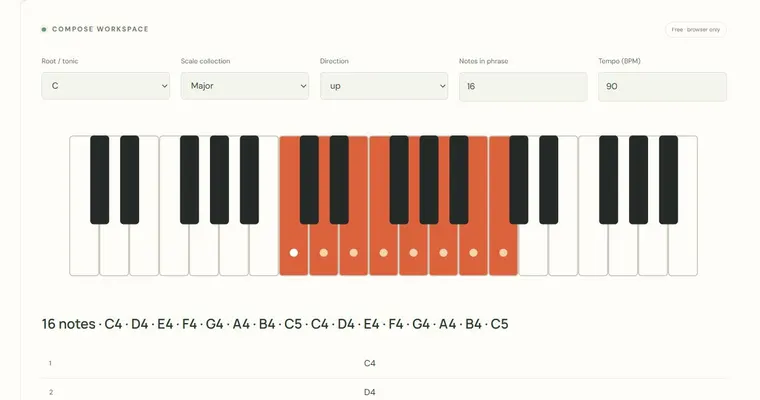
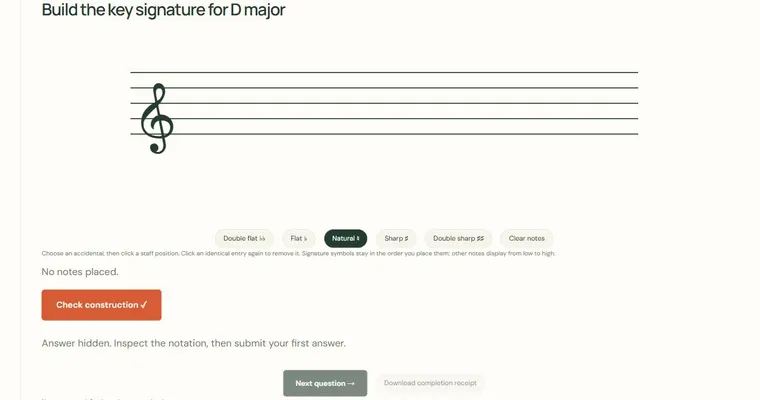
A seven-note scale normally uses each successive letter once before repeating the tonic an octave higher. Its step pattern decides which letters need accidentals. Clicking eight notes is not enough if two are enharmonic substitutions for the required degrees. This construction exercise includes major, natural minor, Dorian, Lydian and Mixolydian. Place the full ascending scale, including the upper tonic. Notes are laid out in ascending written order, and the check compares their exact spellings and octaves.
Try a concrete example
D4 major is D4 E4 F#4 G4 A4 B4 C#5 D5. F-sharp and C-sharp keep the seven different letters; substituting G-flat or D-flat hides that structure.
Make a small practice task
Name the degrees before placing them. Compare major and Lydian on the same tonic and find the single raised fourth.
Read the result carefully
Uses equal temperament and explicit written pitches. No account, teacher identity verification, secure exam proctoring or guarantee of learning. Local records and result receipts are editable by the device owner.
Work with the controls
- Choose treble or bass clef and written-note range
- Choose 1–50 questions and chord types
- Answer once, inspect the spelled-note explanation, then continue
- Keep optional local progress and XP
- Copy a repeatable configuration link; export a self-reported completion receipt
Use a short, repeatable task. Configuration links preserve the visible parameters and start a fresh session rather than sharing private scores. In an exercise, submit one first answer, inspect the revealed spelling and choose Next question. A completed set offers a self-reported receipt. Diagram exports and achievement summaries have their own controls above; they do not evaluate an acoustic performance.
Use the connected resources below to move from this experiment to a specific chord, scale or listening task. A diagram identifies pitches; a generated example gives you something to inspect and adapt. Neither is a prescribed fingering or an assessment of your physical technique.